
Utilizing Before-and-After Case Studies to Foster Trust in Orthopedic and Hair Clinics
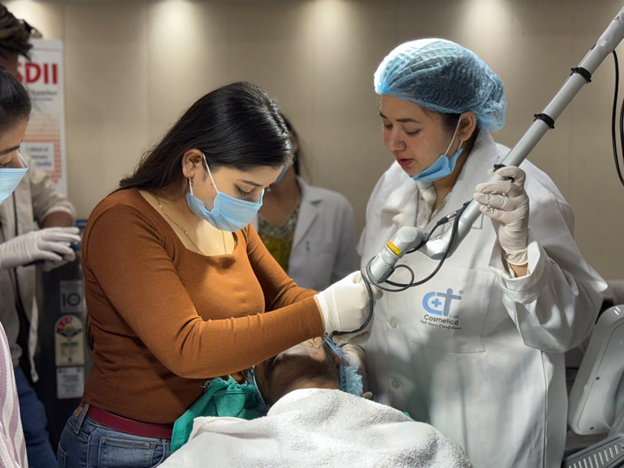
A patient contemplating knee surgery or hair restoration seeks evidence of outcomes. They desire to observe visual representations of results. Pre- and post-operative case studies serve this purpose. However, their effective use requires a careful balance between fostering patient trust and complying with stringent legal and platform regulations.
When executed correctly, case studies evolve into the most effective marketing assets for a clinic. Conversely, if improperly managed, they can lead to complaints, platform bans, and regulatory fines.
Why Case Studies Matter More Than Ever
Patients no longer place trust in generic marketing claims; instead, they rely on evidence. A 2025 study analyzing patient trust in direct-to-consumer telehealth advertisements identified several key factors influencing trust, including information transparency and the presence of authentic patient outcomes [1]. Before-and-after case studies offer precisely this: visual evidence of genuine results.
In competitive medical markets, case studies serve to distinguish clinics from their rivals. A prospective patient evaluating two orthopedic practices is likely to select the one that presents documented outcomes. Regarding hair restoration, where patients commit substantial financial resources, documented results offer critical reassurance.
The patient must place confidence in the clinic regarding their appearance, often incurring significant expenses. The sales process is protracted, skepticism is prevalent, and the competition is intense [2].
Compliance Risks That Cannot Be Ignored
The legal framework governing before-and-after medical advertising is intricate and rigorously enforced.
HIPAA and Patient Privacy
Before-and-after photographs are regarded as Protected Health Information (PHI) under the Health Insurance Portability and Accountability Act (HIPAA) when they include any identifiable features, such as facial images, tattoos, scars, birthmarks, or unique backgrounds [3].
Utilizing patient images without explicit written authorization contravenes HIPAA regulations. The authorization must precisely delineate the intended use of the images, such as on the website, on social media platforms, or in print materials. Permission granted for website use does not implicitly authorize posting on social media. Furthermore, even with proper authorization, photographs must be securely stored within encrypted, access-controlled systems [4].
FTC Advertising Regulations
The Federal Trade Commission mandates the presentation of “competent and reliable scientific evidence” to substantiate any health-related performance claims [5]. Before-and-after photographs that suggest guaranteed outcomes are regarded as deceptive. The FTC has been proactive in enforcing this regulation. In 2025, the agency obtained court orders prohibiting several companies from marketing certain treatments and mandated refunds and penalties exceeding $5.1 million for deceptive claims [6]. The use of misleading before-and-after photographs, including fabricated images, manipulated results, or images from non-patients, is expressly prohibited [7].
State Medical Boards
Numerous states augment federal regulations with supplementary restrictions. Certain state boards mandate specific disclosures to accompany before-and-after images, such as clarifying whether the results are representative or exceptional. Notably, Texas, California, Florida, and New York uphold particularly stringent guidelines.
Platform Advertising Restrictions
Google’s “Before and After” policy, revised in July 2025, prohibits advertisements featuring before-and-after images, even when such images are sourced from medical studies [8]. This restriction applies throughout Google’s advertising network, including Search and Display platforms.
Meta enforces comparable restrictions on sensationalized transformations that could mislead users about likely outcomes. The Advertising Standards Authority (ASA) in the United Kingdom mandates that before-and-after images must be authentic, unaltered, and supported by documentary evidence [9].
What is the practical implication of this regulation? Clinics are prohibited from running paid advertisements that include before-and-after images on major platforms. Nevertheless, organic content, such as website galleries and social media posts on clinic pages, remains permissible subject to appropriate compliance measures.
Building a Compliant Case Study Framework
A legally sound case study framework comprises four essential components.
Written Consent First
A HIPAA-compliant authorization form must be signed before any images are captured. The form should precisely specify the locations where the images will be displayed. Additionally, it should include clear expiration dates or rights of revocation. Documentation of consent must be retained for the duration of the images’ use.
Consistency Without Manipulation
Lighting, angle, expression, and background should remain consistent between the before and after images. The application of filters or edits that amplify results beyond actual outcomes contravenes FTC regulations. Even modifications to brightness or contrast constitute legal exposure if they render results more favorable than reality [10].
Candidacy Context
Each case study must include patient eligibility details, such as age, condition severity, prior treatments, treatment protocol, and session count. Such context helps prospective patients assess the likelihood of similar results in their individual circumstances. For example, a 45-year-old male with Norwood 5 baldness should not anticipate the same outcome as a 30-year-old male with Norwood 2 thinning. In the absence of contextual information, images may be misinterpreted.
Honest Captions and Disclaimers
Captions should explicitly indicate that “individual results vary” and clarify that the outcomes depicted in photographs do not assure comparable results for all patients. In the context of hair restoration, it is important to disclose the timeline from the procedure to the displayed result. Regarding orthopedic outcomes, it is necessary to mention any concurrent treatments or rehabilitation protocols.
Implementation for Orthopedic Clinics
Orthopedic practices managing knee osteoarthritis, rotator cuff tears, or plantar fasciitis may utilize case studies to demonstrate the effectiveness of non-surgical interventions. Patients contemplating PRP or shockwave therapy are interested in reviewing before-and-after outcomes for comparable conditions.
Patient case narratives should describe the patient’s baseline pain level, functional limitations, treatment received, and post-treatment status. Functional outcome documentation provides objective evidence beyond visual appearance. This may include:
- Walking distance,
- Range of motion,
- Heart and breathing rate
- Return to sport, and more.
For clinics providing RegenOMedix IRB-approved stem cell protocols for orthopedic indications, documented case outcomes may be presented within an IRB study framework, thereby enhancing scientific credibility beyond conventional advertising [11].
Implementation for Hair Restoration Clinics
Patients undergoing hair restoration procedures tend to exhibit considerable skepticism. They have encountered exaggerated marketing claims. Genuine case studies serve to dispel doubts. Images ought to be captured from consistent angles:
- Top down,
- Front-facing, and
- Crown view.
Lighting conditions must remain consistent. Each case should include the patient’s age, hair loss classification, graft count, and elapsed time since the procedure.
Marketing for hair transplant clinics that prioritize education over dramatic transformations fosters more enduring trust than reliance solely on before-and-after galleries. This approach constructs a credible narrative that selective highlights cannot replicate.
The Competitive Advantage
Clinics that establish comprehensive, compliant case study libraries will consistently outperform those that rely on generic marketing approaches. Patients are increasingly seeking evidence before making commitments. Providing such evidence—authentically, transparently, and within legal bounds—distinguishes reputable practices from their competitors.
Pre- and post-treatment case studies are effective. They enhance credibility more rapidly than other marketing tools. However, their utilization necessitates safeguarding patient confidentiality, adhering to regulatory standards, and managing platform limitations. Clinics that execute this correctly attain a competitive edge that cannot be matched by those who bypass these protocols.
Networld Online develops compliant case study frameworks for orthopedic clinics, hair restoration practices, and regenerative medicine providers. Contact Networld Online to discuss a case study strategy tailored to your services and compliance requirements.
References
- A. Fogel, B. L. Hoh, S. R. Ortiz, and A. J. S. Coats, “Trust in Direct-to-Consumer Telehealth Advertisements: A Qualitative Study of Patient Perceptions,” J. Med. Internet Res., vol. 27, p. e56789, Jan. 2025. [Online]. Available: https://www.jmir.org/2025/1/e56789/
- Federal Trade Commission, “Health Products Compliance Guidance,” FTC Legal Library, Dec. 2022. [Online]. Available: https://www.ftc.gov/business-guidance/resources/health-products-compliance-guidance
- Federal Trade Commission, “Stem Cell Institute Co-Founders Banned from Marketing and Ordered to Pay $5.1 Million,” FTC Press Release, Jan. 8, 2025. [Online]. Available: https://www.ftc.gov/news-events/news/press-releases/2025/01/stem-cell-institute-co-founders-companies-banned-marketing-stem-cell-treatments-ordered-pay-more-51
- ByrdAdatto Law Firm, “Are Before and After Photos Protected Health Information?” ByrdAdatto Legal Insights, Sep. 29, 2025. [Online]. Available: https://byrdadatto.com/news/are-before-and-after-photos-protected-health-information/
- B. Johnston, “FTC Targets Telehealth Company for Deceptive Weight Loss Marketing Claims,” Nat. Law Rev., vol. XV, no. 224, Aug. 12, 2025. [Online]. Available: https://natlawreview.com/article/ftc-telehealth-weight-loss-marketing-settlement
- Google Ads Help, “Personalized Advertising: Medical Services in Personalized Ads,” Google Policies, Jul. 2025. [Online]. Available: https://support.google.com/adspolicy/answer/143465
- Advertising Standards Authority (ASA), “Before and After Photos: Health and Beauty Advertising Guidance,” UK ASA Compliance, Jun. 5, 2025. [Online]. Available: https://www.asa.org.uk/advice-online/health-beauty-and-slimming-before-and-after-photos.html
- Australian Health Practitioner Regulation Agency (AHPRA), “Guidelines for Registered Health Practitioners Advertising Regulated Health Services,” Dec. 2025. [Online]. Available: https://www.ahpra.gov.au/Resources/Advertising-hub/Guidelines-for-advertising-regulated-health-services.aspx
- J. L. Cohen and R. J. Rossi, “The Ethics of Digital Alteration in Aesthetic Surgery Marketing,” Dermatol. Surg., vol. 51, no. 3, pp. 412-418, Mar. 2026.
- International Society of Hair Restoration Surgery (ISHRS), “Ethics in Hair Restoration Advertising: Use of Patient Imagery,” ISHRS Practice Guidelines, Oct. 2025. [Online]. Available: https://ishrs.org/medical-professionals/ethics-guidelines/
- HIPAA Journal, “Compliance Checklist: Using Patient Photos for Marketing Purposes,” Feb. 14, 2026. [Online]. Available: https://www.hipaajournal.com/hipaa-compliance-patient-photos-marketing/
- M. Tam, “The Comprehensive Visual Narrative in Hair Restoration: Standardization of Photography,” Int. J. Aesthetic Med., vol. 8, no. 2, pp. 89-94, 2025.
- RegenOMedix Newsroom, “RegenOMedix™ Receives IRB Approval for Clinical Use of Ascellos™ Stem Cells,” Feb. 6, 2026. [Online]. Available: https://regenomedix.com/news/irb-approval-ascellos-2026
